
Demulsifier (Oil–Water Separation Agent)
Breaks stable oil-in-water emulsions so flotation and settling can actually remove the oil
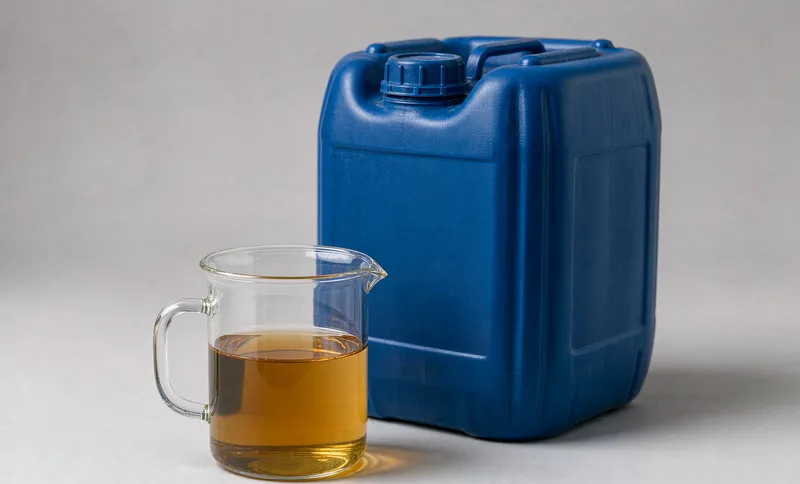
A demulsifier is a blend of polyether block copolymers and cationic polyelectrolytes, supplied as a ≥ 50% active liquid. Emulsified oil in metalworking, refining and coking effluent is held in suspension by surfactants, soaps and fine solids that keep droplets below the size a DAF unit or oil trap can capture; the demulsifier displaces those stabilising films at the oil–water interface, neutralises droplet charge and lets the oil coalesce into a separable layer. Typical dose is 10–100 ppm, injected with 1–3 minutes of mixing ahead of pH adjustment and flotation.
Performance depends on the emulsion, so the sequence matters more than the dose. Many metalworking fluids are stable at pH 8–9.5; acidifying to pH 2–3 first splits the emulsion, after which the demulsifier and a coagulant clean up the residual oil, and the stream is neutralised before the biological stage. In practice the demulsifier is used with PAC, which coagulates the fine solids and residual oil left after splitting, and with anionic or cationic PAM to build flocs strong enough to survive DAF recycle. Overdosing can re-emulsify the oil, so the dose is trimmed from a jar-test optimum rather than increased on poor separation.
Applications extend to refinery and petrochemical oily wastewater, oilfield produced water, knitting and finishing oil in textile plants, and grease-bearing food-processing effluent. Supplied in 25 L and 200 L HDPE drums and 1000 L IBCs, with batch COA and jar-test support for dose selection. The product is not classified as a dangerous good, but it is a concentrate: protect from freezing in transit and stir before use if it has separated on standing.
Technical specifications
| Technical specifications | Unit | Value |
|---|---|---|
| Active content | % | ≥ 50 |
| Ionic character | — | Cationic / non-ionic blend |
| Density (20 °C) | g/cm³ | 0.95–1.05 |
| pH (as supplied) | — | 5.0–8.0 |
| Pour point | °C | ≤ -10 |
| Water dispersibility | — | Dispersible |
| Appearance | — | Pale-yellow to amber liquid |
Typical values for reference only. Final specifications are confirmed per batch COA, available with every shipment.
Applications
- Metalworking and cold-rolling emulsion effluent — emulsion splitting before DAF or chemical precipitation
- Refinery, petrochemical and coking oily wastewater with stable emulsified oil
- Oilfield produced water and tank bottom water ahead of separation
- Textile knitting and finishing oil, and grease-bearing food-processing effluent
Industries & Solutions: Industrial Wastewater, Electroplating Wastewater, Textile & Dyeing Wastewater, Food & Beverage Wastewater
Packaging & shipping
| Packaging | Net weight / volume |
|---|---|
| HDPE drum | 25 / 200 L |
| IBC tote | 1000 L |
Storage & shelf life
Store between 5–40 °C in closed containers, out of direct sunlight. Shelf life 12 months; the product may stratify on standing — stir before use. Do not allow to freeze.
Transport classification
Not classified as a dangerous good under IMDG/IATA; ships as general cargo. Protect from freezing and keep drums upright during transit.
Safety
Cationic concentrate: avoid eye contact and prolonged skin contact, and wear gloves and goggles when handling neat product. Spills make floors slippery — absorb and flush with water. Do not mix with anionic surfactants before dilution. MSDS available on request.
Downloads
Request a quotation for Demulsifier (Oil–Water Separation Agent)
Send Inquiry
We use your data only to answer your inquiry. See our Privacy Policy.
Inquiry received
Thank you — your inquiry has been saved and sent to our sales team. Expect a reply within one business day.
Related products
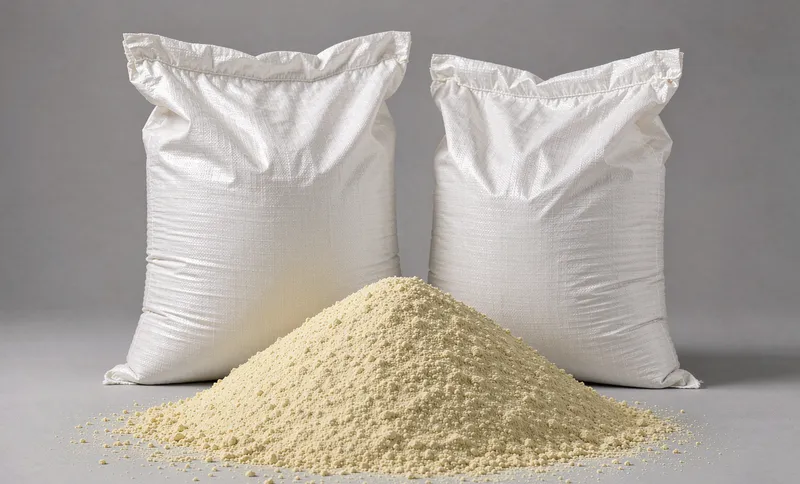 PAC
Poly Aluminium Chloride (PAC)
Coagulants & Flocculants
Inorganic polymer coagulant for suspended solids, phosphorus and colour removal
View product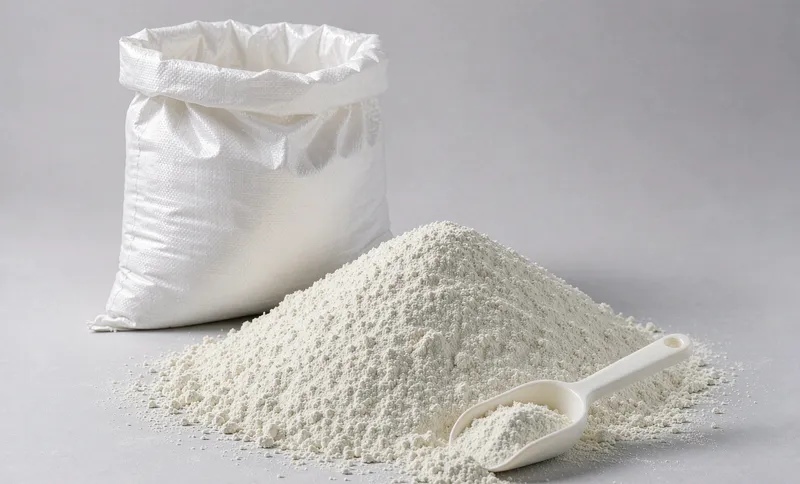 CPAM
Cationic Polyacrylamide (CPAM)
Coagulants & Flocculants
Charge-neutralizing flocculant for organic sludge dewatering and biosolids conditioning
View product BAC
Basic Aluminium Chloride
Coagulants & Flocculants
High-basicity coagulant that barely moves pH — for oily, cold and low-alkalinity water
View product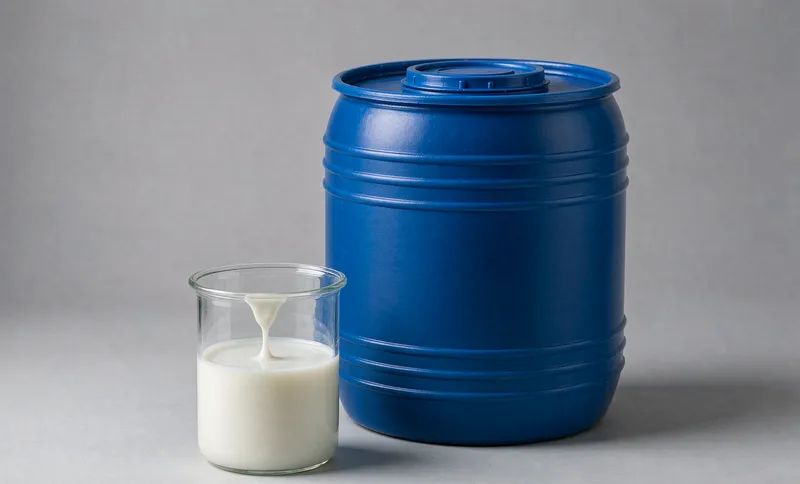
Antifoam / Defoamer
Specialty Chemicals
Silicone-based foam control for aeration basins, MBR and biological treatment
View productRequest a quotation
Send your product, quantity and destination port — you will receive an offer with specifications, packaging and lead time.