
Hanna Env logo HannaEnv

Polyacrylamide Dosing: Six Practical Mistakes to Avoid

Polyacrylamide Dosing: Six Practical Mistakes to Avoid

Wrong dissolution, aging time, dosing point or pump selection waste expensive polymer. Six field-proven rules that keep PAM consumption and dewatering performance on target.

Dissolution: concentration and mixing energy

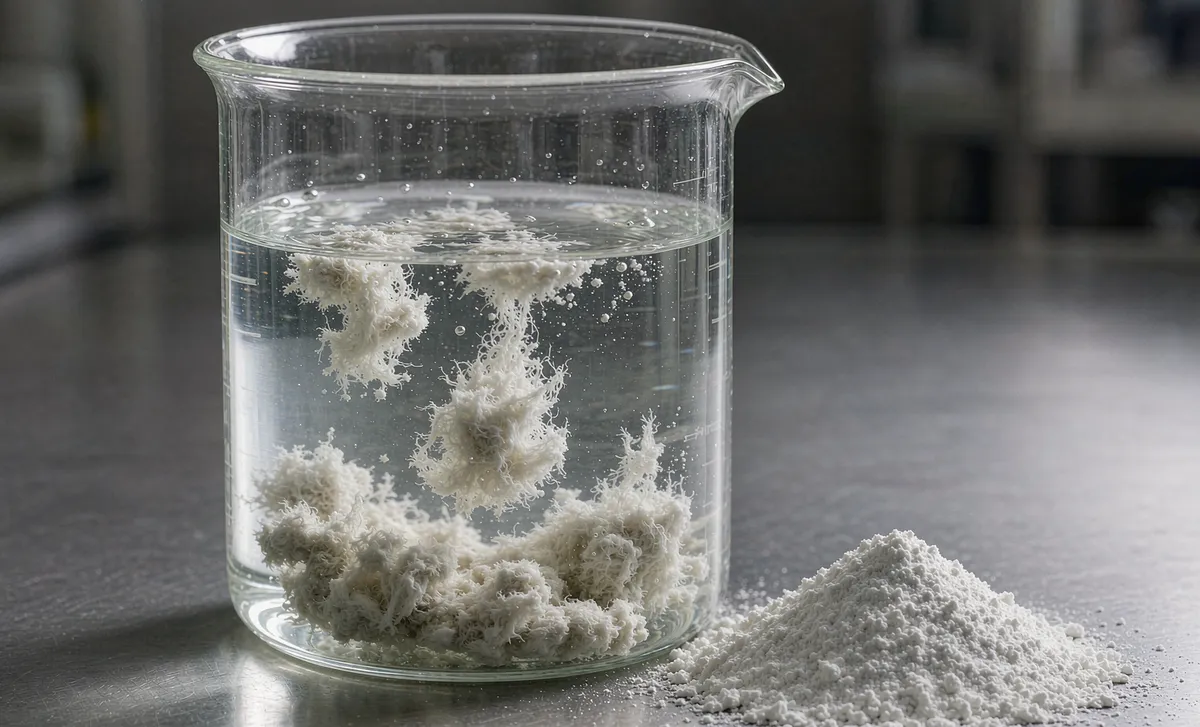
Dry PAM should be dissolved to 0.1–0.3% by weight for most wastewater duties, with 0.5% as the practical ceiling above which the solution becomes too viscous to pump and wets unevenly. Add the powder to moving water in a thin, steady stream at the vortex — never dump it in a heap — and use a low-shear mixer at 200–400 rpm, because a high-speed agitator breaks the long polymer chains and the loss of flocculation strength is permanent. Water temperature matters as well: below about 10 °C dissolution slows sharply and undissolved gel persists, so allow longer mixing in winter rather than raising the dose. A simple check is to pour the made-up solution through a 0.5 mm screen; more than a trace of gel means the preparation, not the product, needs attention.

Aging time after dissolution

After dissolution the polymer chains need time to uncoil and hydrate fully; 30–60 minutes is the usual maturation period, and anionic products in cold water may need the full hour. Dosing a freshly mixed solution is one of the most common hidden costs in a plant, because the polymer is present but not yet active — the operator sees a weak floc, raises the dose, and the excess then shows up as overdose once the tank has aged. Size the preparation tank so that you always draw from solution at least half an hour old, and keep it under slow agitation rather than letting it settle. Dilute PAM solutions degrade over time, so prepare for a shift or at most a day and do not store them for a week.

Dosing point and dilution water

PAM works best where the micro-flocs already exist and there is enough gentle turbulence to mix it in without breaking the flocs it is building. Inject it after coagulation and after any pH correction, at a point giving 30–60 seconds of residence time upstream of the flocculation basin or the dewatering feed, and dilute the stock to 0.05–0.1% before injection so it disperses instead of forming a gel slug. Hard water and high chloride content reduce the effective viscosity of anionic solutions and can bias dosing upwards, while recycled filtrate carrying residual polymer may let you dose lower than a clean-water test suggests. Never dose PAM into a line that runs through a high-shear pump or a static mixer with sharp edges — that is the fastest way to spend polymer for no result.

Charge selection and overdosing

Match the PAM charge to the sludge, not to the brand: cationic grades for organic, biologically active sludge, anionic for mineral and inorganic suspensions, nonionic where high salinity or low pH weakens charged polymers. Overdose has a recognisable signature — the filtrate turns cloudy again, the cake becomes sticky and releases water under pressure, and the free water in the basin stops clearing — because excess polymer re-stabilises the particles it was meant to bind. If you see those symptoms, halve the dose before changing anything else, then adjust in 10–20% steps using a jar test on fresh sludge. Keep a log of dose, charge density and cake dryness; the trend over a few weeks is far more useful than any single reading.

Request a quotation

Send your product, quantity and destination port — you will receive an offer with specifications, packaging and lead time.