
Hanna Env logo HannaEnv

Export Packaging of Water Treatment Chemicals: What Buyers Should Specify

Export Packaging of Water Treatment Chemicals: What Buyers Should Specify

Bag type, liner, pallet pattern and container loading plan decide whether 26 tons of powder arrive dry and intact. A checklist for buyers importing treatment chemicals by sea.

Moisture is the main enemy

Most water treatment powders are hygroscopic to some degree, and PAM, ferrous sulfate and calcium hypochlorite are the most sensitive: once a bag takes up moisture it cakes, and caked polymer dissolves into gel lumps that block dosing lines and strainers. Specify a PE inner liner of at least 0.05 mm in every bag, add a desiccant sachet for long sea voyages, and inspect the container before loading for leaks, condensation or residues from the previous cargo. Stuffing on a dry day and rejecting containers that have carried wet bulk cargo removes most of the risk at almost no cost. A moisture-damaged bag is rarely visible from the outside, so the liner and the inspection record are what you actually rely on at destination.

Pallet pattern and container utilization

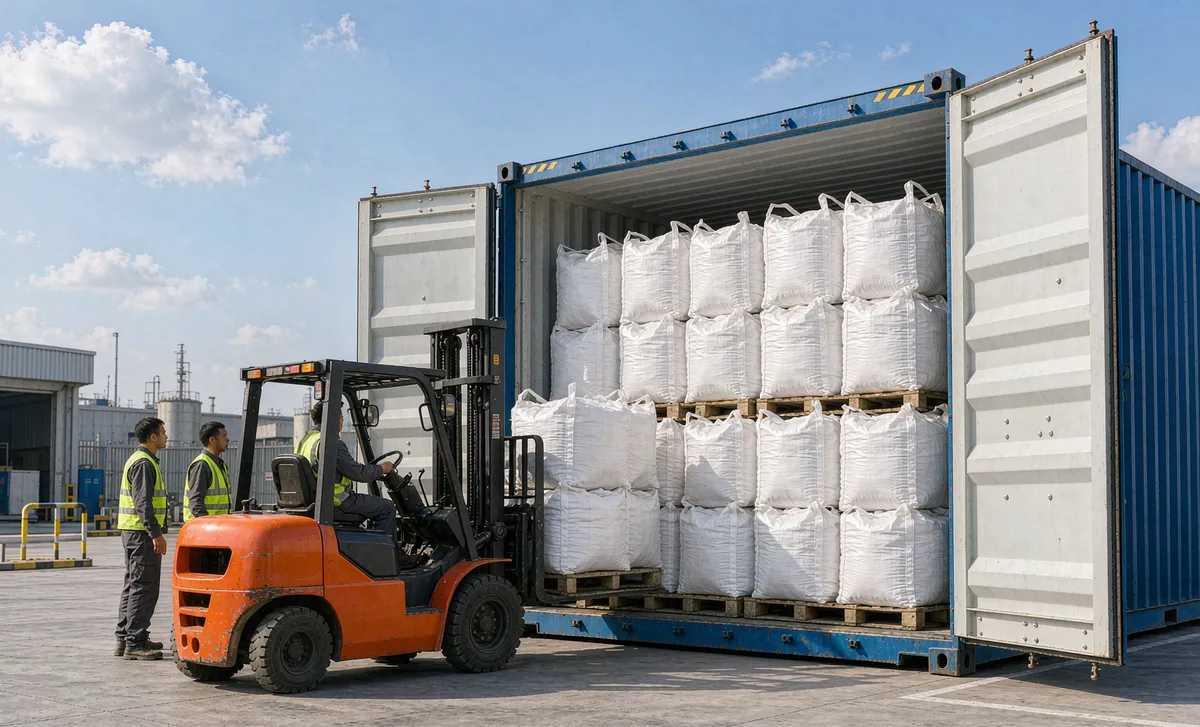
A 20-foot container takes roughly 18–20 tonnes of 25 kg bags on pallets, or 24–26 tonnes floor-loaded, and a 40-foot high-cube takes about double — so the choice between palletized and floor-loaded cargo changes freight cost per tonne directly. Jumbo bags of 500–1,000 kg cut handling time at your warehouse but are harder to move without a forklift and waste headspace when the bag height does not match the container. Agree the pallet footprint (usually 1,000 × 1,200 mm or 1,100 × 1,100 mm), the stacking height and the maximum load per pallet in writing before production, because re-palletizing at the destination port is expensive. If your warehouse cannot unload floor-loaded bags, say so early: planning the pallet pattern is always cheaper than hiring labour at the quay.

Dangerous goods documentation

Sodium hypochlorite (UN 1791, Class 8) and calcium hypochlorite (UN 2880, Class 5.1) must ship in UN-approved packaging carrying the correct UN code, and each consignment needs a dangerous-goods declaration, a packing certificate and a matching MSDS in the language the carrier requires. The declared net quantity per package, the segregation from incompatible cargo and the container packing certificate must agree with what is actually loaded — a mismatch is grounds for the carrier to refuse the booking or for the port to hold the container. Correct documents also protect you at destination: customs and port authorities treat undeclared dangerous goods as a serious violation, and insurers may decline a claim on a misdeclared shipment. Confirm the DG class, UN number and packaging code on the proforma invoice before opening the letter of credit, so the paperwork chain stays consistent from booking to delivery.

Request a quotation

Send your product, quantity and destination port — you will receive an offer with specifications, packaging and lead time.